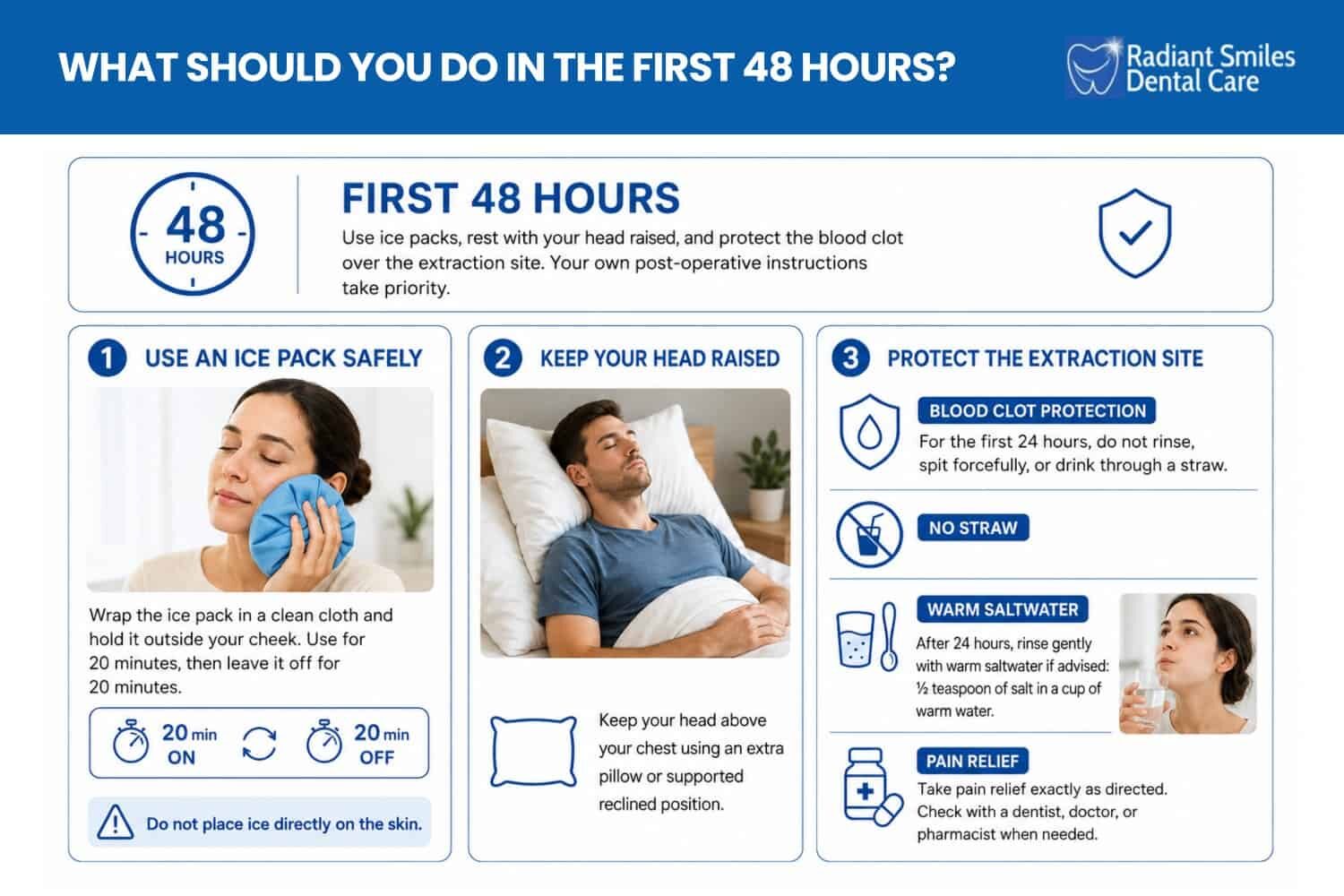
To reduce wisdom teeth swelling, hold a wrapped ice pack to your cheek in 20-minute intervals for the first 48 hours. Keep your head raised while sleeping. From day 3, switch to warm, saltwater rinses as your dentist directs.
Red flag: when to phone us
Phone the clinic if swelling keeps worsening after day 3, your temperature rises above 38°C, or you notice pus at the extraction site.
Also call if pain becomes severe or if it does not settle with the pain relief recommended for you.
Key Takeaways
- Apply wrapped ice packs in 20-minute intervals for the first 48 hours.
- Keep your head raised and avoid exercise.
- Wait 24 hours before gentle saltwater rinses.
- After 48 hours, use warm water only if your dentist approves.
- Phone the clinic if swelling worsens after day 3, or fever, pus, or increasing pain develops.
Why does swelling happen after wisdom teeth removal?
Swelling happens because removing a wisdom tooth injures the gum and often the surrounding bone. Your body then sends fluid and inflammatory cells to the site as the first stage of healing.
Some swelling, jaw stiffness, and bruising are expected. The amount varies with the tooth position, the difficulty of the extraction, and how your body responds. Swelling usually peaks around day 2 or 3, then begins to settle.
What should you do in the first 48 hours?
In the first 48 hours, use ice packs, rest with your head raised, and protect the blood clot over the extraction site. Your own post-operative instructions take priority because aftercare differs between patients.
How should you use an ice pack safely?
Wrap the ice pack in a clean cloth and hold it against the outside of your cheek. Use it for 20 minutes, then leave it off for 20 minutes, and repeat while you are awake.
Do not place ice directly on the skin. Ice applied directly to the skin can damage the tissue underneath.
How should you position your head?
Keep your head raised above your chest, using an extra pillow or a supported reclined position. Elevation limits the fluid that pools around the jaw while you sleep.
How do you protect the extraction site?
Do not rinse, spit forcefully, or drink through a straw during the first 24 hours. These actions can dislodge the blood clot that protects the socket.
After 24 hours, rinse gently with warm saltwater if your dentist has advised it. Dissolve half a teaspoon of salt in a cup of warm water, then let the water fall from your mouth rather than spitting hard.
Take pain relief exactly as directed. Check with a dentist, doctor, or pharmacist before using over-the-counter medicine if you have a medical condition, an allergy, or take other medicines.
What should you do during days 3 to 7?
From day 3, a comfortably warm, damp compress can ease jaw stiffness. Hold it against the outside of your cheek for about 20 minutes, then let the skin rest.
Do not use very hot compresses. If the swelling feels hard or hot, keeps increasing, or comes with fever or pus, phone the clinic instead of applying heat.
Choose soft foods such as eggs, yoghurt, mashed vegetables, pasta, or cooled soup. Avoid hard foods and small pieces that can lodge in the socket.
Brush your other teeth as normal, but stay gentle near the extraction site. Continue saltwater rinses as instructed and do not probe the socket with your tongue or fingers.
Avoid strenuous exercise for the first few days. Build activity back up slowly and follow any restrictions given to you after sedation.
What does wisdom teeth recovery look like day by day?
| Recovery stage | What is usually normal | What to do |
|---|---|---|
| Day 0 | Oozing, numbness, soreness, and early swelling | Rest, apply wrapped ice in 20-minute intervals, keep your head raised, and choose cool, soft foods. Do not rinse. |
| Day 1 | Swelling and discomfort often increase | Continue cold packs and elevation. Start gentle, warm saltwater rinses after 24 hours if instructed. Avoid smoking, alcohol, straws, and strenuous activity. |
| Day 2 | Swelling is often close to its peak | Continue the first 48-hour plan. Eat soft foods and take pain relief only as directed. |
| Day 3 | Swelling peaks | Stop routine icing after 48 hours. Apply gentle external warmth if your dentist agrees. Phone the clinic if the swelling worsens. |
| Days 4 to 5 | Swelling, bruising, and jaw stiffness ease gradually | Keep cleaning gently and eating soft foods. Increase daily activity slowly. |
| Days 6 to 7 | Chewing and mouth opening feel easier | Return to firmer foods as comfort allows, but keep hard pieces away from the socket. Seek advice if recovery is not progressing. |
When should you call the clinic?
Should the swelling worsen within three days, or if it reappears after initially improving, please reach out to the clinic. Fever, pus, a foul taste, increasing pain, or feeling unwell all need professional assessment.
A few days after the extraction, a severe, throbbing pain that begins or worsens could be a sign of dry socket. The pain can spread towards the ear or eye and often comes with bad breath or an unpleasant taste.
We will ask about your symptoms and examine the site. Treatment may involve cleaning the socket or placing a medicated dressing. Antibiotics are used only when they are clinically indicated.
At Radiant Smiles Dental Care, we can assess healing after wisdom teeth removal in Perth or after a tooth extraction. A dentist may refer a complex case to an oral surgeon when that is appropriate. If anxiety affects your future dental care, ask us about sleep dentistry and sedation. Suitability depends on your health, the planned procedure, and a clinical assessment.
FAQs on How to Reduce Wisdom Teeth Swelling
How long does wisdom teeth swelling last?
Wisdom teeth swelling usually peaks around day 2 or 3, then reduces. Mild swelling or bruising can last 5 to 7 days, or longer, after a difficult extraction.
Is swelling worse on day 3 normal?
Swelling is often at its worst around day 2 or 3, so day 3 swelling is common. Contact the clinic if it keeps increasing, feels hard or hot, or comes with fever, pus, or worsening pain.
When should you stop using ice after wisdom teeth removal?
Stop routine icing after the first 48 hours. Gentle warmth can then help jaw stiffness, provided your dentist agrees and there are no signs of infection.
Can you sleep on your side after wisdom teeth removal?
You can sleep on your side if your head stays raised and pressure stays off the treated cheek. A supported, reclined position is often more comfortable for the first 2 nights.
What does dry socket feel like?
Dry socket causes severe, constant throbbing pain that starts a few days after an extraction. The pain can spread to the ear or eye and may come with bad breath or an unpleasant taste. Contact your dentist if this happens.
Can you take pain relief for wisdom teeth swelling?
Take only the medicine and dose recommended by your dentist, doctor, or pharmacist. Follow the packet directions and notify a professional if you are pregnant, have a medical condition or an allergy, or take other medicines.
Back to Top: How to Reduce Wisdom Teeth Swelling: A Day-by-Day Guide for Perth Patients