Porcelain veneers typically last 10 to 15 years or more, while composite veneers last 4 to 8 years. Actual lifespan depends on your bite, your oral hygiene, your diet, the quality of the placement, and whether you grind your teeth.
Key Takeaways
- Porcelain veneers typically last 10 to 15 years or longer, while composite veneers last 4 to 8 years.
- Veneers are not permanent. Their lifespan depends on the material, bonding quality, oral hygiene, bite forces, diet, and daily habits.
- Teeth grinding and clenching can cause early wear, chipping, or bonding failure. A dentist-prescribed night guard may help protect your veneers.
- Chips, cracks, lifting margins, colour changes, movement, or new sensitivity should be assessed by a dentist.
- Regular dental checks and careful cleaning can help identify minor problems before a veneer requires full replacement.
Porcelain vs. Composite | How Long Does Each Last?
Porcelain veneers usually last longer and resist staining better than composite. Composite veneers are more likely to need polishing, repair, or replacement sooner. Neither material is permanent, and results vary between patients.
| Veneer type | Typical lifespan | What usually affects it |
|---|---|---|
| Porcelain | 10 to 15 years or more | Bond to enamel, bite forces, grinding, chips, gum health, and daily care |
| Composite resin | 4 to 8 years | Surface wear, staining, chips, grinding, and polishing or repair history |
These ranges are planning guides, not expiry dates. A veneer can need attention earlier after a fracture or a bonding problem. A veneer can also stay serviceable beyond the typical range when the tooth, bite, and margins stay healthy.
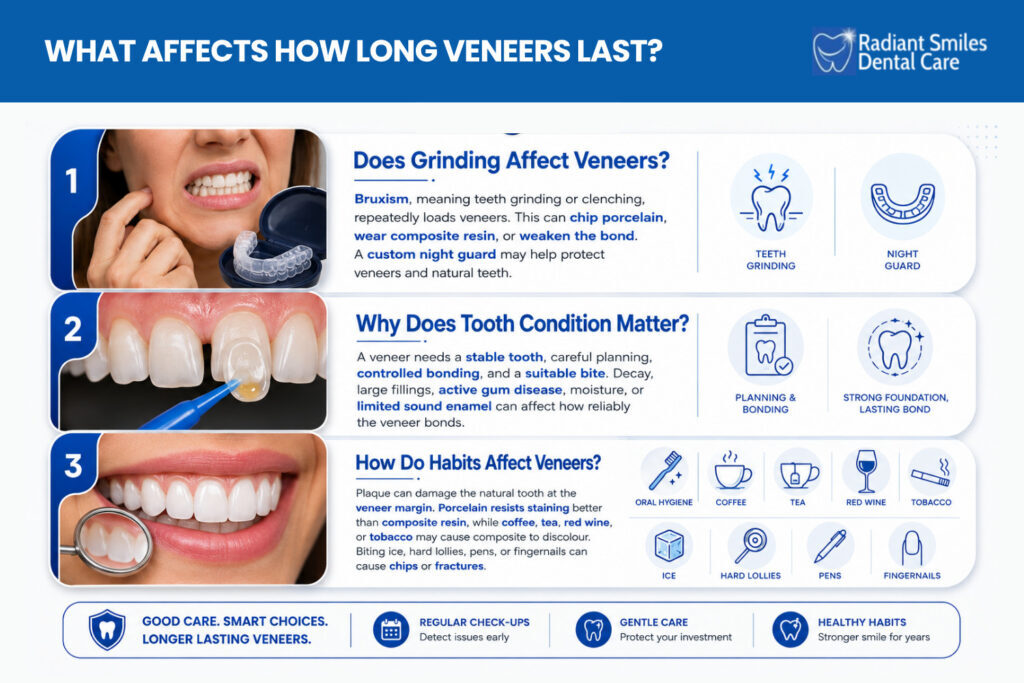
What affects how long veneers last?
Veneer lifespan depends on the material, the bonded tooth surface, your bite, and how well the tooth and gums are maintained.
Do grinding and clenching shorten veneer lifespan?
Yes. Bruxism, meaning teeth grinding or clenching, repeatedly loads the edges and bonded surfaces of veneers. That pressure can chip porcelain, wear composite resin, or weaken the bond earlier than expected.
You may grind in your sleep and have no memory of it. If your dentist finds wear or other signs of bruxism, a custom night guard may help protect both the veneers and your natural teeth.
Why do placement quality and tooth condition matter?
A veneer needs a stable tooth, careful planning, controlled bonding, and a bite that does not overload its edges. Moisture during bonding or limited sound enamel can reduce how reliably the veneer bonds.
Decay, large existing fillings, or active gum disease can also change the treatment plan. A dentist must assess these issues before placing or replacing a veneer.
How do hygiene, diet, and daily habits affect veneers?
Plaque cannot decay porcelain or composite resin, but it can damage the natural tooth at the veneer margin. Gum inflammation or decay can expose an edge and make repair or replacement necessary.
Porcelain resists surface staining better than composite resin. Composite may discolour or lose gloss earlier, especially with frequent coffee, tea, red wine, or tobacco.
Biting ice, hard lollies, pens, or fingernails concentrates force on a small area. This raises the chance of a chip or fracture in either material.
What are the signs a veneer needs replacing?
A veneer needs assessment when it chips, cracks, loosens, develops a rough or lifting margin, changes colour, or brings on new sensitivity. These signs do not always mean full replacement is required.
A dentist checks the veneer, its bond, the supporting tooth, the gums, and your bite. Minor composite damage may be polished or repaired. A loose porcelain veneer, or decay beneath a margin, may require replacement.
New pain, swelling, a sharp edge, or a veneer that moves should be assessed promptly. Do not try to glue a loose veneer back at home because household adhesives are not safe for use in the mouth.
How can you make veneers last longer?
You can support veneer lifespan by controlling bite forces and keeping the tooth and gum around each margin healthy. These steps reduce avoidable wear, staining, gum inflammation, and decay.
How do you protect your bite?
Wear a dentist-prescribed night guard if grinding or clenching affects your teeth. Do not use veneers to tear packaging, bite fingernails, or crack hard foods.
How should you clean around veneers?
Brush twice daily with fluoride toothpaste and a soft toothbrush. Clean between the teeth each day with floss or another method your dentist recommends.
Why do regular dental checks matter?
Regular examinations let a dentist monitor the veneer edges, gums, bite, and underlying teeth. Early polishing, a bite adjustment, or a small repair can prevent a larger problem.
What does replacing a veneer involve?
Veneer replacement starts with an examination to identify why the existing veneer failed or no longer looks acceptable. The dentist then plans whether repair, replacement, or another treatment is appropriate.
For replacement, the old veneer is carefully removed, and the tooth is assessed. Any decay or gum problem must be treated before a new composite or porcelain veneer is bonded.
Porcelain veneer treatment commonly involves removing a thin layer of enamel. Enamel does not grow back. How much further preparation a replacement needs depends on the tooth structure left beneath the old veneer.
For current fee information and treatment options, see our guide on veneers at Radiant Smiles Dental Clinic in Perth. Payment options are set out on the payment options page.
Prices are provided as a general guide only and are not meant to be binding. All dental procedures require your dentist to provide an accurate assessment of your unique medical needs before providing you with a cost estimate.
If you are considering veneers or have concerns about an existing veneer, you can book an assessment with us, and we will guide you through your options.
FAQs on How Long Do Veneers Last
Do veneers stain over time?
Porcelain veneers resist staining well and rarely change shade. Composite veneers can stain and lose gloss over time, though a dentist can often polish a composite surface to improve its appearance.
Can teeth whitening change the colour of veneers?
No. Whitening products lighten natural tooth structure but do not reliably change the shade of porcelain or composite veneers. A dentist can plan whitening before replacement when shade matching matters.
Can tooth decay develop around or beneath a veneer?
Yes. The veneer itself cannot decay, but the natural tooth can decay near an exposed or leaking margin. Daily cleaning and regular dental checks help identify margin problems earlier.
Should an old veneer be removed if it is not causing problems?
Not on age alone. A dentist can monitor a veneer that stays secure and functional, with healthy gums and sound tooth structure beneath it.
Can a new veneer match older neighbouring veneers?
Often, yes, but matching gets harder when nearby veneers or natural teeth have changed shade. The dentist and dental laboratory assess colour, translucency, surface texture, and lighting before treatment.
Back to Top: How Long Do Veneers Last?